Changes in weather and daylight throughout the year can affect the health, behavior, and daily routines of dogs and cats. Veterinary information published in recent years identifies seasonal changes in temperature, environmental allergens, parasites, activity levels, and outdoor exposures as factors that can influence pets.
Fall and Environmental Changes
As summer transitions into fall, cooler temperatures and shorter days can affect activity patterns. Recent veterinary information has reported that some pets experience changes in appetite, sleep, and activity as daylight hours decrease. Cats may become more active during cooler temperatures, while some dogs may experience changes in outdoor activity as daylight becomes limited. Seasonal allergens, including ragweed pollen, dust, and mold, can also affect pets during the fall months.
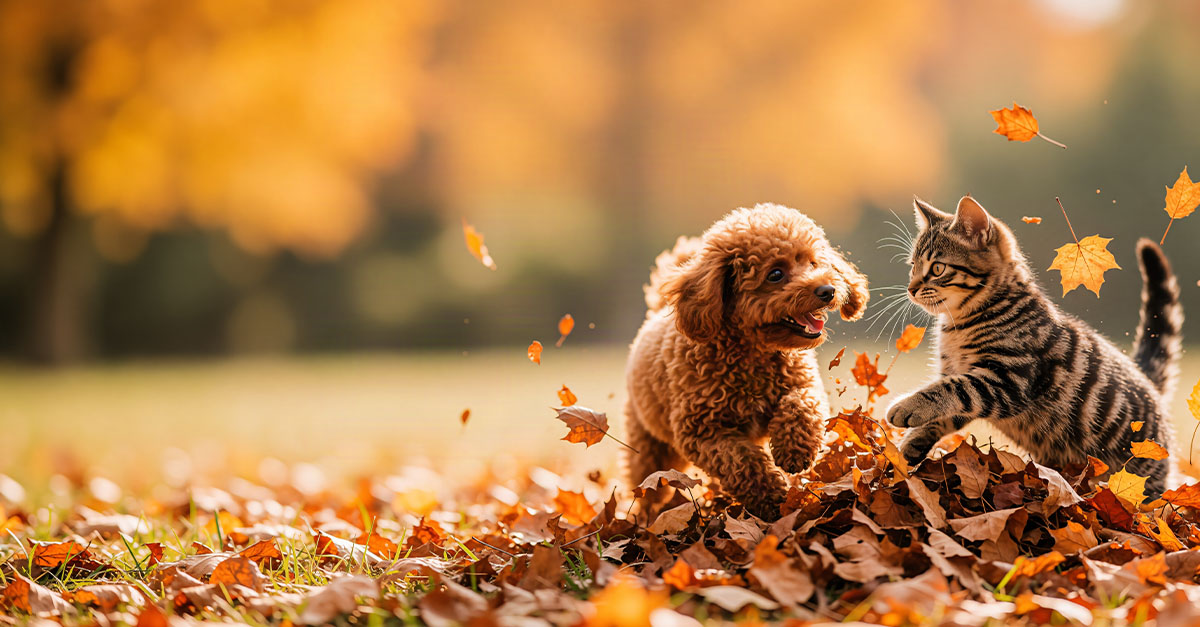
The changing environment can introduce additional exposures. Falling leaves, damp organic material, mushrooms, and seasonal plants can create potential hazards for curious animals. Veterinary sources also identify rodenticides and antifreeze as products that may become more prevalent during the transition into cooler weather.
Temperature and Mobility
Cooler temperatures can also be associated with changes in mobility, particularly among older pets or animals with existing joint conditions. Veterinary information has reported that some pets with arthritis may experience increased stiffness or changes in movement as temperatures decline. These changes can affect activities such as walking, climbing stairs, jumping, or getting up from a resting position.
Parasites and Seasonal Exposure
The arrival of cooler weather does not necessarily eliminate exposure to fleas and ticks. Recent veterinary information continues to identify parasites as a concern during fall, with activity varying according to geographic location and weather conditions. Outdoor activity can also increase opportunities for pets to encounter wildlife and other environmental exposures.
Pets and Seasonal Transitions
Seasonal changes can affect pets in several ways, from their activity and behavior to their exposure to environmental allergens and hazards. Current veterinary information emphasizes that these effects can vary considerably between individual animals based on factors such as age, breed, health status, and environment.
Overall, the transition between seasons represents a period when environmental conditions, daily routines, and potential health concerns can change for companion animals. Veterinary research and current clinical information continue to examine how these seasonal factors influence the health and well-being of pets.
Sources:
ElleVet Sciences. Seasonal Changes and Your Pets. 2025.
Petco Animal Care, Education and Compliance Team. Ultimate Fall Safety Guide for Pets. 2025.