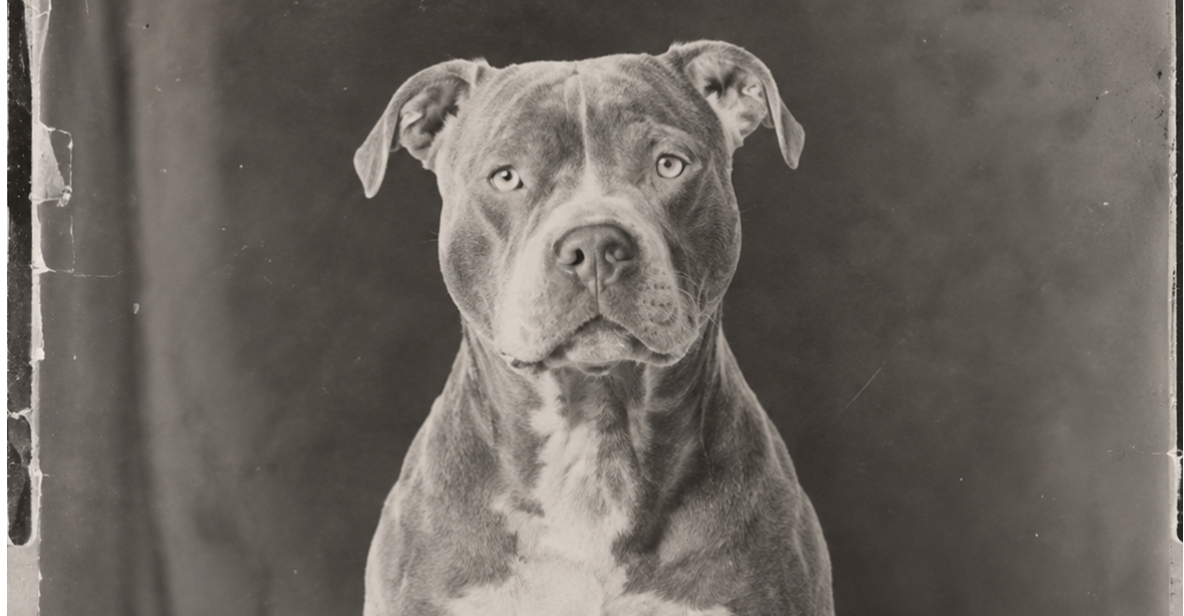
National Pit Bull Awareness Day is observed on the fourth Saturday in October, which falls on October 24 this year. The day was created to encourage people to look beyond stereotypes surrounding pit bulls and the people who own them. That is a subject close to home for me. Over the years, my family has shared our home with a pit bull, an American Bulldog and a pit bull cross, and they were very much members of our family.
As a veterinarian, though, I think good advocacy includes being honest about what we know. Pit bulls are powerful dogs. Some research has found behavioral differences among breeds and breed groups, including differences involving interactions with other dogs. Research into serious bite injuries also gives us good reason to respect the physical consequences when a large, powerful dog does bite.
The science still gives us very poor justification for assuming that a particular pit bull is dangerous simply because he or she is a pit bull.
Breed tells us less about an individual dog than most people think
One of the largest modern studies of canine genetics and behavior was published in Science in 2022. Researchers collected behavioral information on 18,385 dogs and genetic data on more than 2,000 of them. Breed explained only about 9% of the behavioral variation among individual dogs.
Some characteristics were more strongly associated with breed ancestry than others. Behaviors involving responsiveness to people, for example, showed greater breed differences. A trait the researchers called “agonistic threshold,” essentially how readily a dog responds negatively when frightened or uncomfortable, was particularly difficult to predict from breed.
That is an important distinction when we are talking about aggression. Breed can tell us something about tendencies within large populations of dogs. It is a weak tool for predicting how the individual dog standing beside you is going to behave.
What about pit bulls specifically?
A separate 2022 genetics and behavior study examined pit bull-type dogs along with other breeds and mixes. In that community sample, pit bull-type dogs were not more aggressive overall and were not more likely to have a behavioral diagnosis than other dogs. The researchers actually found a reduced risk of owner-directed aggression at one severity level.
There is some nuance when other dogs enter the picture. Earlier behavioral research cited by those investigators found greater dog-directed aggression among pit bull-type dogs, while still finding lower aggression toward owners. The newer study found increased extreme fear directed toward unfamiliar dogs in a small portion of the pit bull-type group. Those findings are worth knowing if you live with multiple dogs, and they are a good reminder to take socialization, supervision and individual temperament seriously.
They do not provide evidence that pit bulls as a group are unusually aggressive toward people.
When a powerful dog bites, the injury can be serious
There is another part of the research that pit bull advocates should be willing to discuss.
Studies conducted in hospitals have repeatedly found pit bull-type dogs among the breeds associated with severe bite injuries. A 2026 study from a Level I trauma center examined 276 patients treated for dog bites between 2016 and 2024. Dogs reported as pit bulls were involved in nearly one-third of those injuries, and 61.5% of patients bitten by dogs identified as pit bulls required surgery, compared with 47% of patients bitten by other dogs.
That study does not tell us the probability that a pit bull will bite someone. It started with people who had already been bitten badly enough to enter a trauma registry, and the researchers specifically cautioned that breed identification came from patients and could be biased. We also do not have a reliable denominator telling us exactly how many pit bull-type dogs live in the population from which those cases arose.
What it does reinforce is common sense. Size, strength and anatomy can affect what happens when a serious bite occurs. Responsible ownership of any strong dog includes respecting that strength.
Why breed bans have not solved dog bites
If identifying certain breeds as dangerous were an effective way to prevent dog bites, we should be able to see that effect in communities that have tried it.
The evidence has not shown much success. A 2022 systematic review of 43 studies on dog-bite prevention found that general dog-control measures could reduce bite rates, while breed-specific legislation had much less effect. A 2024 study comparing Missouri municipalities with and without breed-specific restrictions found no association between those laws and emergency-department visits for dog bites.
The American Veterinary Medical Association takes a similar position. Its dog-bite prevention policy states that veterinarians should not predict an individual dog’s propensity for aggressive behavior based solely on breed and should not label entire breeds or classes of dogs as dangerous.
That approach makes sense when we look at what influences behavior. Genetics matter, and so do early experiences, socialization, training, health, living conditions, management and the circumstances surrounding an interaction.
Responsible ownership still matters
None of this means owners should ignore behavioral warning signs because their dog has always been sweet. That applies to pit bulls, German shepherds, Labradors, poodles and every other dog I see.
Watch how your dog behaves around unfamiliar people and animals. Take growling, escalating dog-to-dog tension, resource guarding, fear and other warning behaviors seriously. Use secure fencing and leashes appropriately, teach children how to interact safely with dogs, and seek professional help when a behavior problem begins rather than waiting for it to become dangerous.
For owners of powerful dogs, good management is especially important because mistakes can have bigger consequences.
National Pit Bull Awareness Day gives us an opportunity to replace some old assumptions with better information. Pit bulls should be respected for what they are: individual dogs with individual temperaments, living in individual homes with individual histories.
Judge the dog in front of you.
Dr. Jenkins
Healing Springs Animal Hospital
Galax, Virginia
SOURCES
Morrill K, et al. Ancestry-inclusive dog genomics challenges popular breed stereotypes. Science. 2022. Breed explained approximately 9% of behavioral variation among individual dogs in a study involving 18,385 dogs.
Zapata I, Lilly ML, Herron ME, et al. Genetic testing of dogs predicts problem behaviors in clinical and nonclinical samples. BMC Genomics. 2022;23:102. The community sample found pit bull-type dogs were not more aggressive overall or more likely to have a behavioral diagnosis than other dogs, while discussing earlier evidence of increased dog-directed aggression.
Hovell M, et al. Behind the Bite: Ownership and Breed as Predictors of Dog Bite Severity. Journal of Surgical Research. 2026;321:303-307. Among 276 trauma patients, bites attributed to pit bulls were more likely to require surgical intervention, although the authors specifically noted potential patient bias in breed identification.
Duncan-Sutherland N, et al. Systematic review of dog bite prevention strategies. Injury Prevention. 2022;28(3):288-297. The review found broader dog-control measures more effective than restrictions based on breed.
Wyker B, Gupta M. Emergency department visits for dog bite injuries in Missouri municipalities with and without breed-specific legislation. Frontiers in Public Health. 2024. The study found no association between breed-specific laws and rates of emergency-department visits for dog bites.
American Veterinary Medical Association. Dog Bite Prevention Policy. The AVMA considers it inappropriate to predict an individual dog’s aggressive behavior solely from breed.