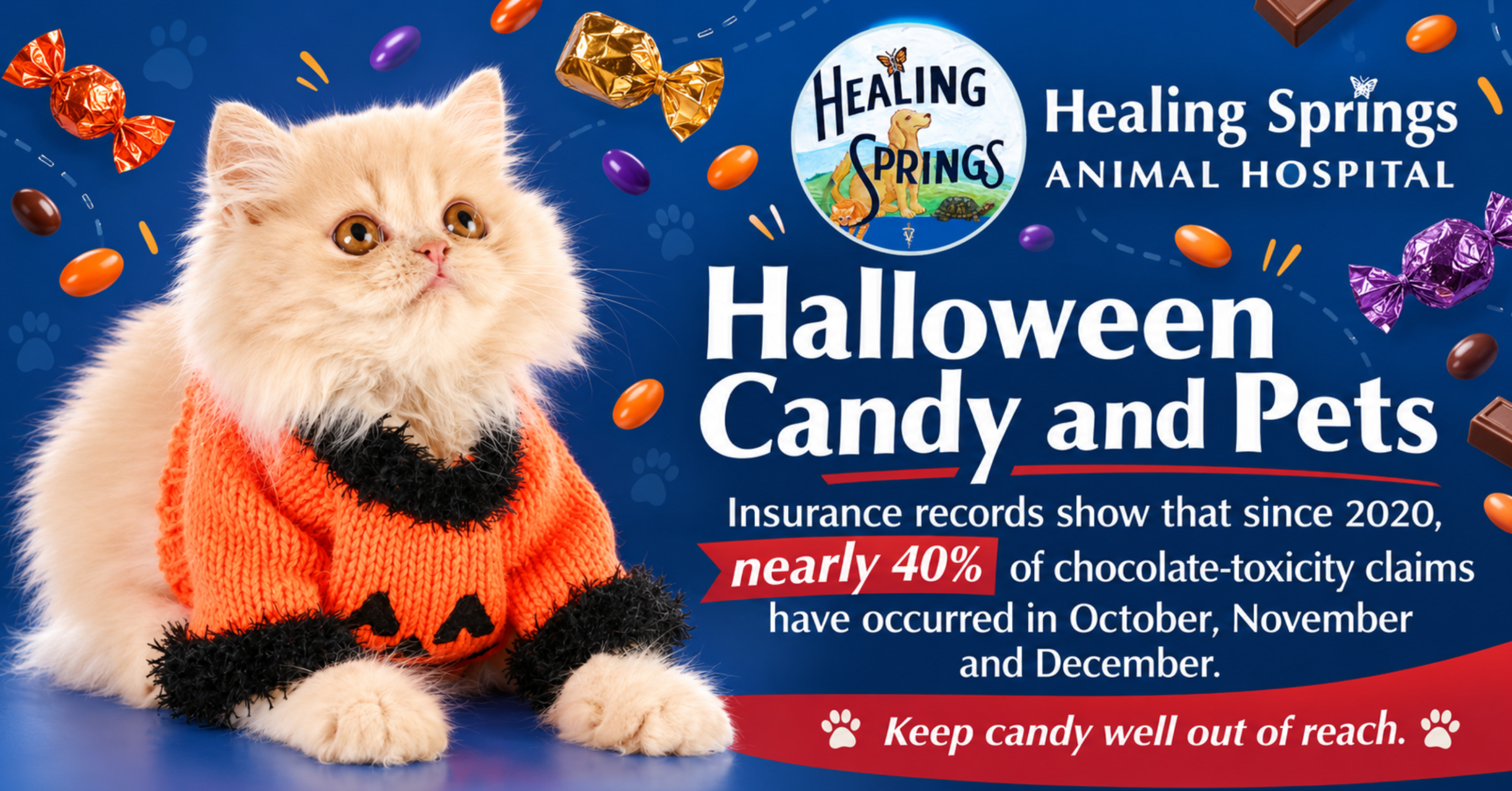
Insurance records show that since 2020, nearly 40% of chocolate-toxicity claims have occurred in October, November and December. Halloween begins a three-month stretch when a lot more chocolate is sitting around our homes, and our pets are apparently pretty good at finding it.
I know. Veterinarians write Halloween safety articles every year. We remind you that some pets would rather skip the costume, that costumes should not have little pieces that can be chewed off and swallowed, that an excited dog can slip through a front door while trick-or-treaters are coming and going, and that identification should be current. Those are all reasonable precautions, and the ASPCA continues to make many of the same recommendations.
Then there is the candy, and the numbers give us a good reason to spend another minute talking about it.
Think about chocolate the way you think about medication
If I had a small child in my house, I would not put a bottle of medicine somewhere that was merely inconvenient to reach. I would put it somewhere the child could not get it. I think that is a useful way to think about chocolate when you have a dog in the house.
A bowl pushed toward the back of the kitchen counter may seem safely out of the way until you live with a dog who is large, determined or unexpectedly athletic. A trick-or-treat bag left on a child’s bedroom floor can be even more tempting. The ASPCA specifically recommends keeping candy on high counters or secured in a cabinet, and points out that a dog’s sense of smell can lead him or her to candy that a child thought was well hidden.
Halloween night deserves some attention, but I would keep that habit going afterward. Leftover candy can linger in bedrooms, purses, backpacks and kitchen bowls for weeks.
Some chocolate is more dangerous than others
Chocolate contains theobromine and caffeine, and the amount varies considerably depending upon the type of chocolate. Dark chocolate and baking chocolate generally present more risk than milk chocolate. The dog’s size and the amount eaten matter as well, which is why there is no useful rule such as “one candy bar is safe” that applies to every pet.
Halloween bags can contain some additional concerns. Sugar-free candy may contain xylitol, which can be life-threatening to dogs. Raisins, macadamia nuts and other ingredients occasionally found in candy or baked treats can create their own problems.
If your pet gets into the candy
If you discover an empty wrapper, torn candy bag or suspiciously happy dog, try to determine what was eaten and approximately how much. Save the package or ingredient list if you have it. Your veterinarian will also want to know your pet’s approximate weight and when the candy was eaten.
Then call rather than waiting for symptoms to develop. That information helps us judge the potential dose and decide what should happen next. The ASPCA Animal Poison Control Center also provides 24-hour assistance at 888-426-4435.
Most of us will get through Halloween with nothing more dramatic than a dog barking at a superhero on the front porch. A little thought about where the candy goes can help keep it that way.
Dr. Jenkins
Healing Springs Animal Hospital
Galax, Virginia
SOURCES
Trupanion. Chocolate Toxicity in Pets: 8,300 Pets Treated Since 2020. October 27, 2025. Trupanion reports that nearly 40% of its chocolate-toxicity claims since 2020 occurred during October, November and December.
ASPCA Animal Poison Control Center. Halloween Safety Tips and Don’t Get Tricked by These Pet Hazards This Halloween. Current guidance on chocolate, xylitol, costumes, identification and candy storage.