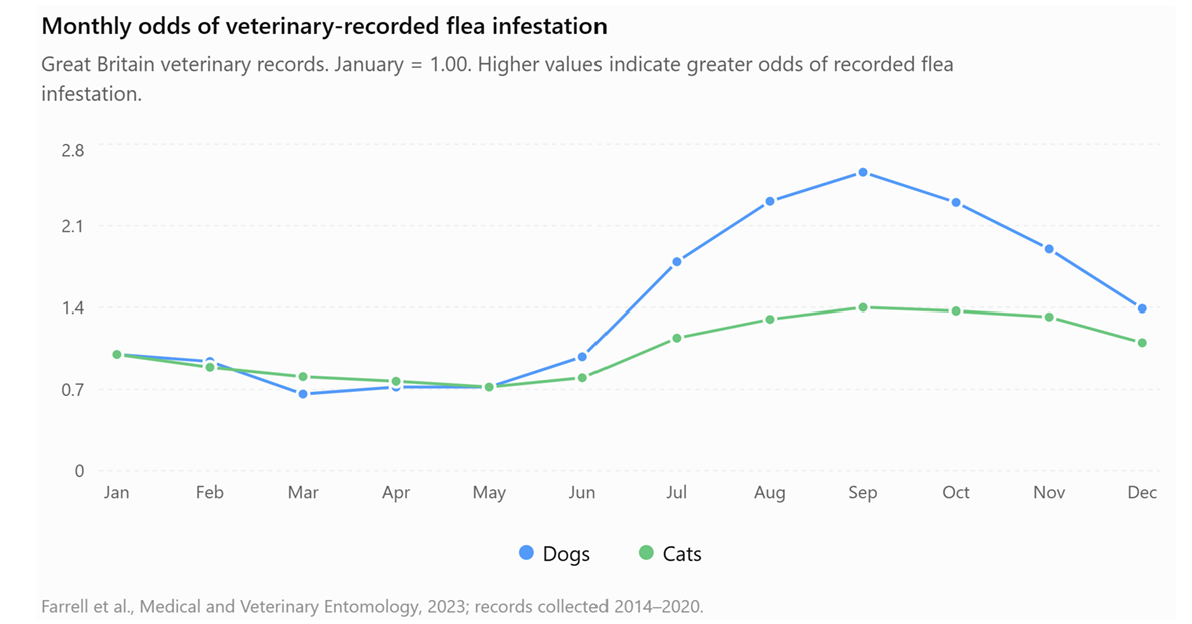
Cooler mornings may have you thinking that flea season is winding down. The numbers suggest October deserves a little more respect. A large veterinary study looked at nearly 6.75 million dog and cat consultations over more than six years. Researchers found a clear seasonal pattern, and flea infestations remained high well into the fall.
Take a look at the chart above. For dogs, the odds of a veterinarian recording a flea infestation peaked in September and remained almost as high in October.
Using January as the baseline:
July: 1.79 times the January odds
August: 2.31 times
September: 2.56 times
October: 2.30 times
November: 1.90 times
December: 1.39 times
Cats followed a similar seasonal pattern, although the increase was less dramatic. Their highest odds also occurred in September, and flea activity remained elevated through October and November.
October is definitely flea season
Here in Southwest Virginia, October brings chilly nights, changing leaves and plenty of pets spending more time indoors. Fleas can still be very much part of the picture. The study found flea cases during every month of the year. That matters because flea prevention sometimes slips off the household checklist once summer vacations, hot weather and mosquito season begin to fade from memory. October is actually one of the months when the data tell us to remain especially alert.
A flea problem can follow your pet inside
Finding a flea on your dog or cat can mean there are already other stages of the flea life cycle developing in the environment. Eggs can fall from pets into carpeting, furniture and bedding. Larvae and pupae can continue developing there, allowing a flea problem to become established inside the home. Once that happens, getting rid of fleas can take time.
The Companion Animal Parasite Council recommends year-round flea control for dogs and cats and notes that established household infestations may take several months to bring under control. That is one reason prevention is generally much easier than trying to catch up after fleas have become established.
Watch for more than scratching
Some pets with fleas scratch constantly. Others may show surprisingly few obvious signs.
Things I want owners to watch for include:
Frequent scratching, licking or chewing
Irritated skin, especially around the lower back and base of the tail
Small scabs or areas of hair loss
Tiny dark specks in the coat that may be flea dirt
Fleas moving through the hair when you part the coat
Cats can be particularly good at grooming away evidence before their owners ever see an actual flea.
Pets with flea allergy dermatitis can also react strongly to flea bites, so even a relatively small number of fleas can cause significant itching and skin irritation.
Keep prevention going through fall and winter
The seasonal numbers make a pretty good case for leaving flea prevention on the calendar. If you are unsure whether your pet’s current flea and tick preventive should continue through the winter, ask us. The right product can depend on your pet’s age, health, lifestyle and other medications.
At Healing Springs Animal Hospital in Galax, we can help you choose an appropriate parasite prevention plan for your dog or cat.
And if your pet suddenly starts scratching this October, remember what that chart shows. The fleas may be right on schedule.
Dr. Jenkins
Healing Springs Animal Hospital
Galax, Virginia
SOURCE
Farrell S, et al. Seasonality and other risk factors for flea infestations in domestic dogs and cats. Medical and Veterinary Entomology. 2023. The study analyzed electronic veterinary records from 191 practices across Great Britain from March 2014 through July 2020.