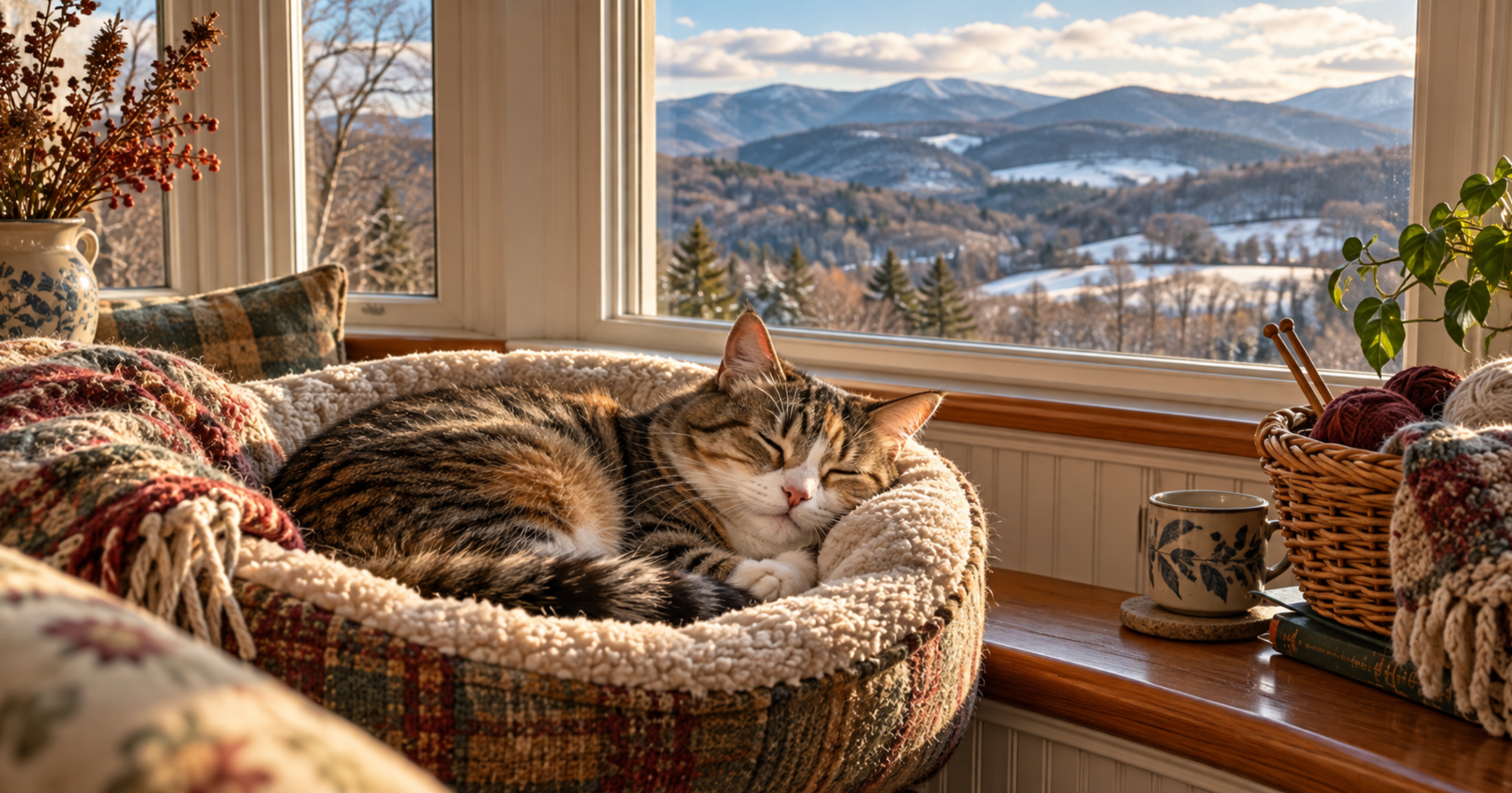
November is Senior Pet Health Awareness Month, which makes this a good time to talk about a phrase veterinarians hear fairly often: “He’s just getting old.”
Sometimes an older dog really does move a little more slowly, sleep more deeply and take longer to get going in the morning. Cats may become less athletic or spend more time in their favorite chair. Aging changes the body, and eventually all of our pets show it. The important question is what is causing a particular change and whether we can do something to make that pet feel better.
The American Animal Hospital Association recently noted that nearly half of pets miss a veterinary visit during their final year of life. Those final years are often when regular examinations can do the most good, because arthritis, kidney disease, heart disease, cancer, dental disease, endocrine disorders and cognitive changes all become more common as pets age. AAHA
Slowing down may mean something hurts
One of the easiest changes to dismiss is reduced mobility. An older dog may hesitate before climbing stairs, stop jumping into the car, take longer to stand up or quietly give up a favorite spot on the couch. Cats are especially good at adapting. A cat with painful joints may simply stop jumping onto the kitchen counter, choose a lower piece of furniture or spend less time upstairs.
Those changes can be signs of osteoarthritis or another painful condition. AAHA notes that studies have found osteoarthritis in at least one joint in more than 60% of cats, even though cats often lack some of the examination findings we commonly associate with arthritis. Videos taken at home can be surprisingly useful because they show us how a pet gets up, walks, uses stairs or jumps in the environment where he or she is most comfortable. AAHA
Pain management has also improved tremendously during the years I have been practicing veterinary medicine. There are medications, environmental changes, weight-management strategies and other approaches that can sometimes restore activities owners assumed their pet had simply outgrown.
Pay attention to changes in appetite, weight and thirst
A senior pet who gradually loses weight deserves our attention, even when he or she still seems happy. Drinking substantially more water, urinating more frequently, eating much more or less than usual, or losing muscle can accompany several illnesses seen in older pets. Kidney disease, diabetes, thyroid disorders and other conditions can begin with changes subtle enough to blend into everyday life.
This is one reason an examination becomes more valuable when we can compare today’s pet with the pet we saw six months or a year ago. Weight trends, muscle condition, physical findings and laboratory values can provide clues before an illness becomes obvious at home. AAHA’s senior-care guidelines recommend a complete blood count, blood chemistry and urinalysis every six to twelve months for senior dogs and cats, with additional testing based on the individual patient. AAHA
Behavior changes count too
A dog who begins wandering at night, staring into corners, getting stuck behind furniture, having accidents in the house or seeming confused may be experiencing canine cognitive dysfunction. Changes in sleep, interaction with family members, activity and anxiety can all be part of the condition. AAHA estimates that age-related cognitive impairment affects approximately 14% to 22.5% of dogs older than eight years, and early signs are easily missed. AAHA
Cats can experience cognitive changes as well. An older cat may begin vocalizing at night, become unusually clingy, seem confused or develop changes in litter-box habits. Those behaviors deserve an examination because cognitive dysfunction is only one possibility. Pain, kidney disease, hyperthyroidism, hypertension, urinary disease and changes in vision or hearing can produce some of the same things an owner notices at home.
Early recognition matters because some causes are treatable, and management of cognitive dysfunction itself can include changes in diet, enrichment, medications and treatment of accompanying pain or anxiety. AAHA
Little changes are worth mentioning
You spend far more time with your pet than I ever will in an examination room. You are the person most likely to notice that she no longer runs to the door, that he takes three attempts to jump onto the bed, or that the water bowl suddenly needs to be filled twice as often.
Those observations matter.
Make a mental note, write them down or take a video with your phone. Bring them with you when your pet comes in for an examination. A collection of small changes often tells us considerably more than one dramatic symptom.
Senior does not mean finished
There is no single birthday when every dog becomes a senior. Large dogs generally age faster than small ones, and AAHA defines the senior stage in dogs as roughly the final quarter of the expected lifespan for that breed or size. Cats are generally considered senior after about age ten. AAHA
What matters more to me is how your particular pet is doing.
At Healing Springs Animal Hospital, caring for older dogs and cats often means looking for the things that can still be improved. Sometimes that means treating arthritis. Sometimes we discover dental pain, kidney disease or another condition that had quietly been developing. Sometimes the examination reassures us that an old friend really is doing remarkably well.
Growing older is something we expect.
Feeling bad because of a treatable problem should never automatically be filed under “just getting old.”
Dr. Jenkins
Healing Springs Animal Hospital
Galax, Virginia
SOURCES
American Animal Hospital Association. 2023 AAHA Senior Care Guidelines for Dogs and Cats. The guidelines emphasize that old age itself is not a disease and recommend individualized preventive, diagnostic and treatment plans for senior pets. AAHA
American Animal Hospital Association. Tips for Senior Pet Care Awareness Month. November 21, 2025. AAHA reports that nearly half of pets miss a veterinary visit during their final year. AAHA
American Animal Hospital Association. Evaluating the Healthy Senior Pet and Diagnostic Tests and Recommended Frequencies for Senior Dogs and Cats. Guidance on mobility, osteoarthritis and senior screening.