When the Mayflower left England in September 1620, 102 passengers were aboard, along with two dogs. Historical records identify them as a mastiff and a spaniel. We do not know much about either dog’s life, including their names, but we know enough to establish that they made themselves memorable almost immediately after arriving in New England. Pilgrim Hall Museum
As we get ready for Thanksgiving, I thought the dogs deserved a little attention too.
A walk in the woods goes badly
In January 1621, passengers Peter Browne and John Goodman were cutting thatch for roofing near the Plymouth settlement. At midday they took some food and went for a walk, bringing the dogs along. According to the surviving account, the mastiff and spaniel spotted a deer and did exactly what many dogs would still do today. They took off after it. Browne and Goodman followed them and promptly became lost. Pilgrim Hall Museum
The situation became serious. It rained, then froze and snowed, and the men were poorly dressed for spending a winter night outside. They had no real weapons besides the sickles they had been using for work. During the night they heard what they believed were lions roaring nearby, probably some other animal interpreted through the ears of frightened newcomers in an unfamiliar wilderness. Search parties were sent out, but Browne and Goodman eventually found their own way back after climbing high enough to see the bay and reorient themselves. Pilgrim Hall Museum
Dogs have apparently been getting people into trouble for at least 400 years.
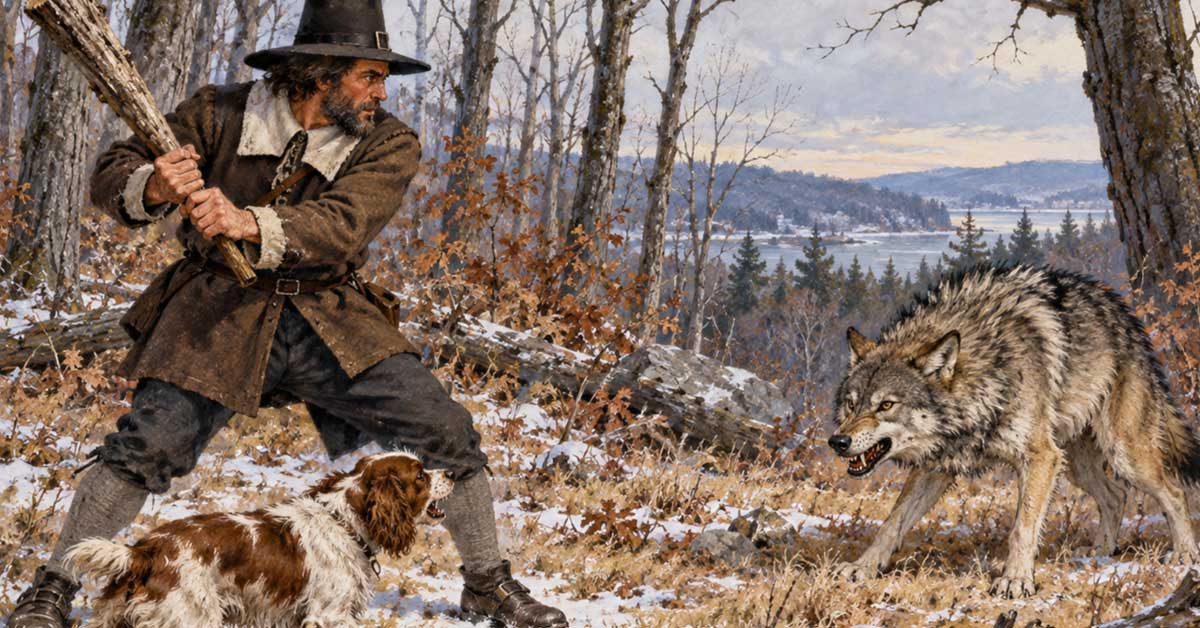
The spaniel was not quite finished. Once Goodman had recovered enough to walk again, he reportedly took the little dog out with him and encountered a wolf. The wolf followed them for some time while the spaniel stayed close to Goodman, who eventually armed himself with a fence post. After what sounds like a very uncomfortable standoff, the wolf finally went away. MayflowerHistory.com
Were the dogs at the first Thanksgiving?
We do not know.
The famous gathering we now call the First Thanksgiving was actually a three-day harvest celebration held later in 1621. Edward Winslow left the only surviving eyewitness account. He described the English going fowling, Ousamequin, also known as Massasoit, arriving with about 90 men, and the Wampanoag party bringing five deer. He did not tell us whether the mastiff and spaniel were wandering around looking hopefully at the venison. Plimoth Patuxet Museums
We do know the dogs were part of the little Plymouth settlement during that first year. About half of the 102 Mayflower passengers survived to attend the harvest celebration, and no other English ship arrived before it took place. That places our mastiff and spaniel in a very small community where daily life revolved around finding food, building shelter and getting through the coming winter. Pilgrim Hall Museum
There is something wonderfully ordinary about knowing dogs were there.
Dogs in two very different cultures
Dogs were familiar to the Wampanoag people as well, although their relationship with animals differed from the European idea of pet ownership. Plimoth Patuxet Museums explains that Wampanoag people sometimes fed and cared for dogs, birds and other animals, but allowed them to come and go rather than regarding them as possessions or household pets in the English sense. Their traditions emphasized respect for animals as living beings with lives of their own. Plimoth Patuxet Museums
That is an interesting detail when we picture these two cultures encountering one another. People on both sides knew dogs. The relationships and beliefs surrounding those animals were not necessarily the same.
Four centuries later
I spend most of my days around dogs and cats, and one thing about this story feels remarkably current. Put a dog beside a person, add an interesting smell or a deer running through the woods, and sometimes the next part of the story writes itself.
We will never know the names of the two Mayflower dogs or whether somebody slipped them a piece of meat during the 1621 harvest celebration. We do know they crossed the Atlantic, explored a completely unfamiliar place with their people, chased wildlife, caused some trouble and provided companionship during an extraordinarily difficult year.
That sounds an awful lot like dogs.
Dr. Jenkins
Healing Springs Animal Hospital
Galax, Virginia
SOURCES
Pilgrim Hall Museum. The Plymouth Tapestry, Panel by Panel. The museum records the Mayflower departing England with 102 passengers and two dogs. Pilgrim Hall Museum
Pilgrim Hall Museum. Peter Browne (Brown) and primary Plymouth records concerning Browne and John Goodman. These sources recount the January 1621 deer chase and the men’s night lost in the woods. Pilgrim Hall Museum
Plimoth Patuxet Museums. Eye-Witness Account of the 1621 Harvest Celebration and Thanksgiving. Edward Winslow’s surviving account describes the three-day harvest gathering and the approximately 90 Wampanoag men who attended with Ousamequin. Plimoth Patuxet Museums
Plimoth Patuxet Museums. Animals: Wampanoag Respect for Animals. Background on Wampanoag relationships with dogs and other animals in the 1600s.